Brand monitoring for small teams: what to track and what to ignore
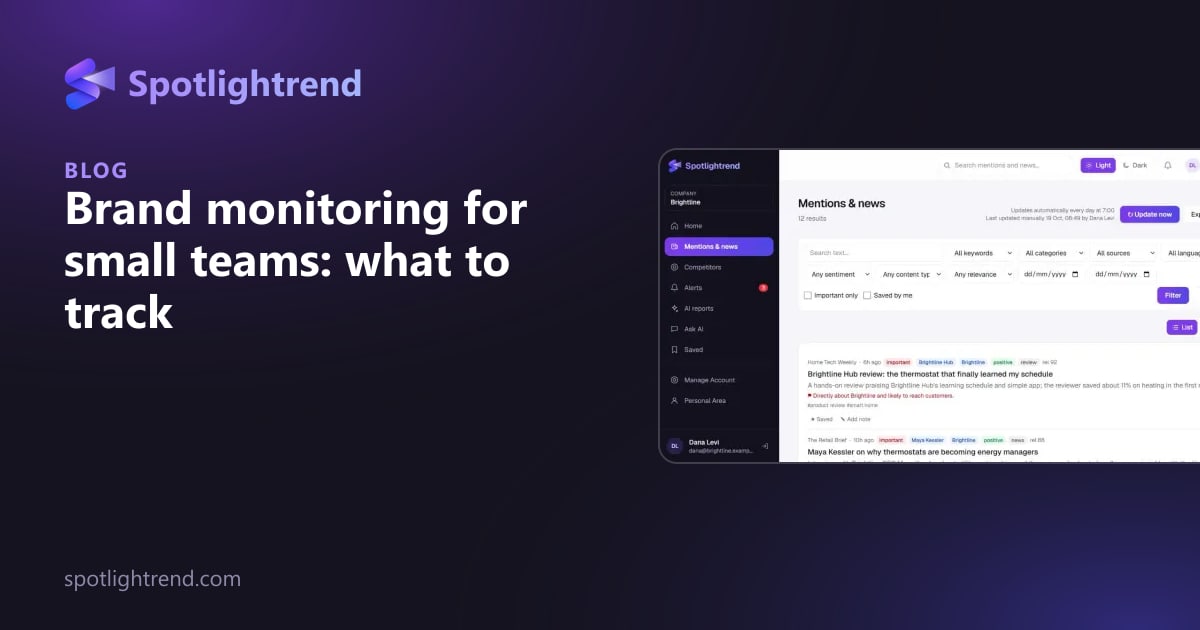
Big companies have communications departments with a person whose whole job is reading what is written about the brand. A team of three does not. Brand monitoring for a small team has to work differently: fewer things tracked, tracked well, and checked in a few minutes a day.
Here's a setup that works when nobody has "monitoring" in their job title.
Start with five kinds of keywords
Most small teams either track only their company name, which misses a lot, or track fifty loosely related terms, which buries them. A good starting list fits on one screen and covers five groups:
The brand itself
Your company name, plus common misspellings and the version without spaces or with a different capital letter.
Products
Product names that people use on their own, without your company name next to them.
People
Founders and executives who speak publicly. Journalists often quote the person, not the company.
Competitors
Their brand names. Articles about them are often articles about your market.
Industry topics
Two or three phrases that describe your category. Keep these specific; "software" is not a topic.
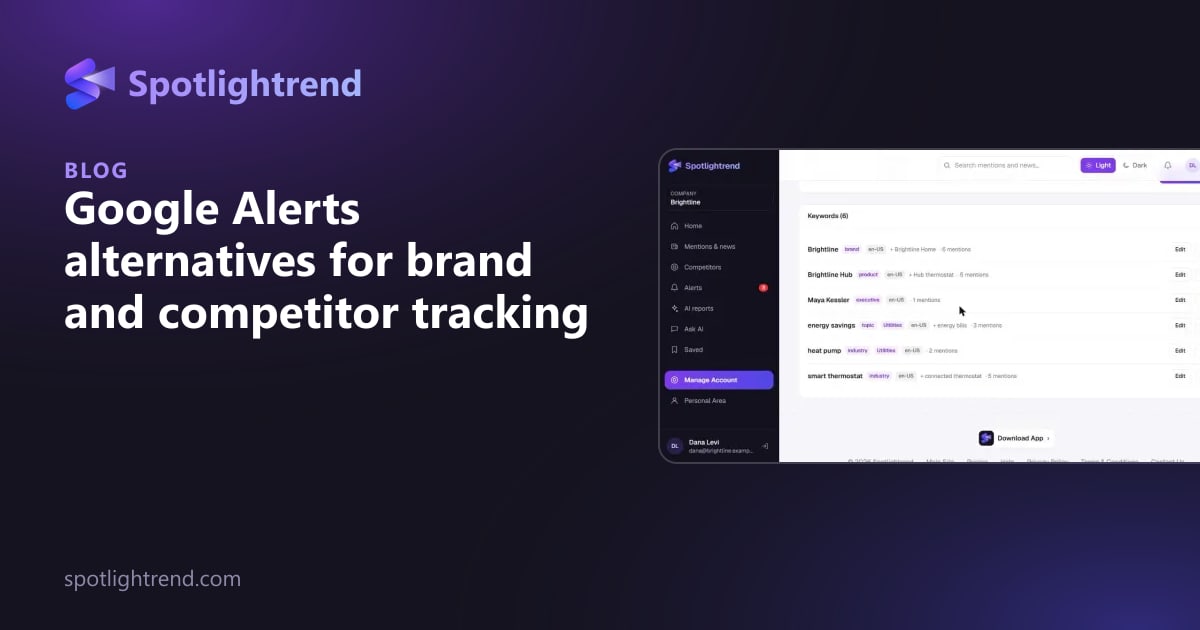
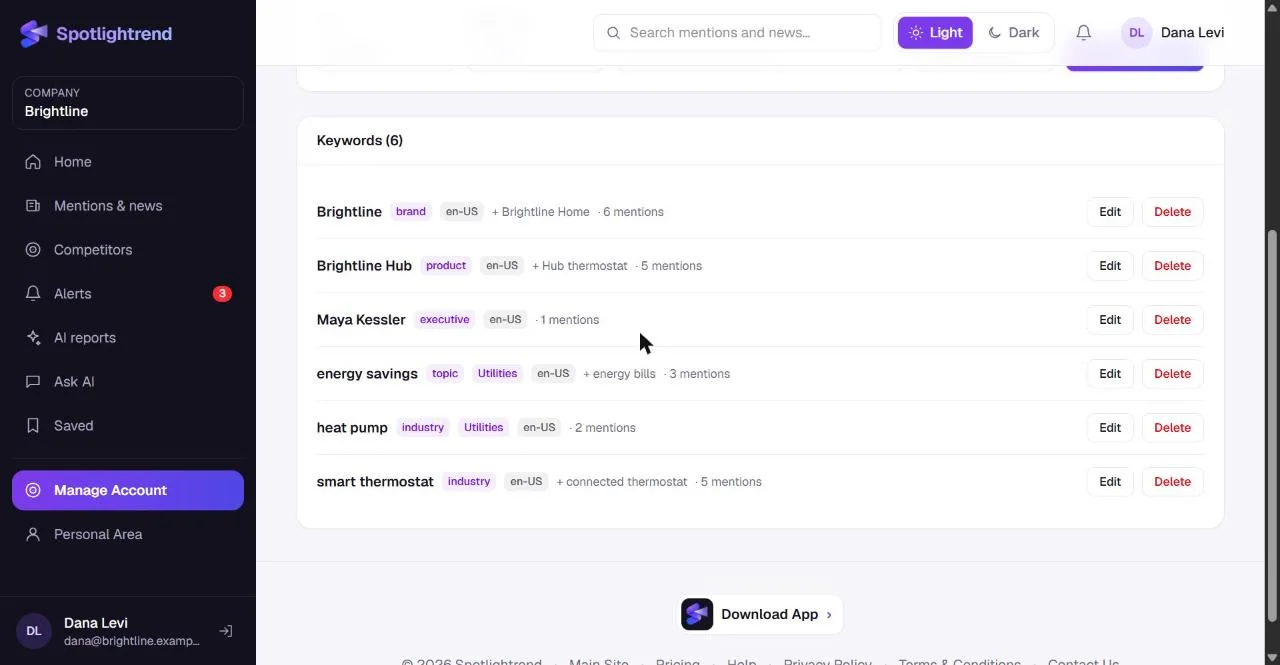
Grouping keywords this way also makes the results easier to read later. In Spotlightrend each keyword can have one or more categories, including ones you make up, and every list can be filtered by them.
Pick sources on purpose
For most small companies, the news that matters comes from three places: general news, the trade press of your industry, and a handful of blogs or newsletters everyone in your niche reads. General news is easy to cover through Google News. The other two usually publish RSS feeds, and adding them by hand is worth the ten minutes, because that's where the specific, useful mentions tend to appear.
Choose the right news edition, too. A company selling in Germany wants German-language results; a company selling in the US wants the US edition. Tracking the wrong edition is one of the most common reasons a monitoring setup looks empty.
What to ignore
A small team's most valuable monitoring skill is deciding what not to read. Some safe things to skip:
- Exact duplicates. The same press release republished on thirty sites is one event, not thirty.
- Mentions where your keyword means something else. If your brand is also a common word, add the context words that make it yours, or accept that this keyword needs a filter.
- Old news resurfacing. Aggregators love to repost last year's article. Check the date before you react.
- Every single social media post. Unless your audience lives on one platform, start with articles and publications. You can add more later.
A routine that fits in ten minutes
Monitoring works when it's a habit, not a project. A routine that small teams actually keep:
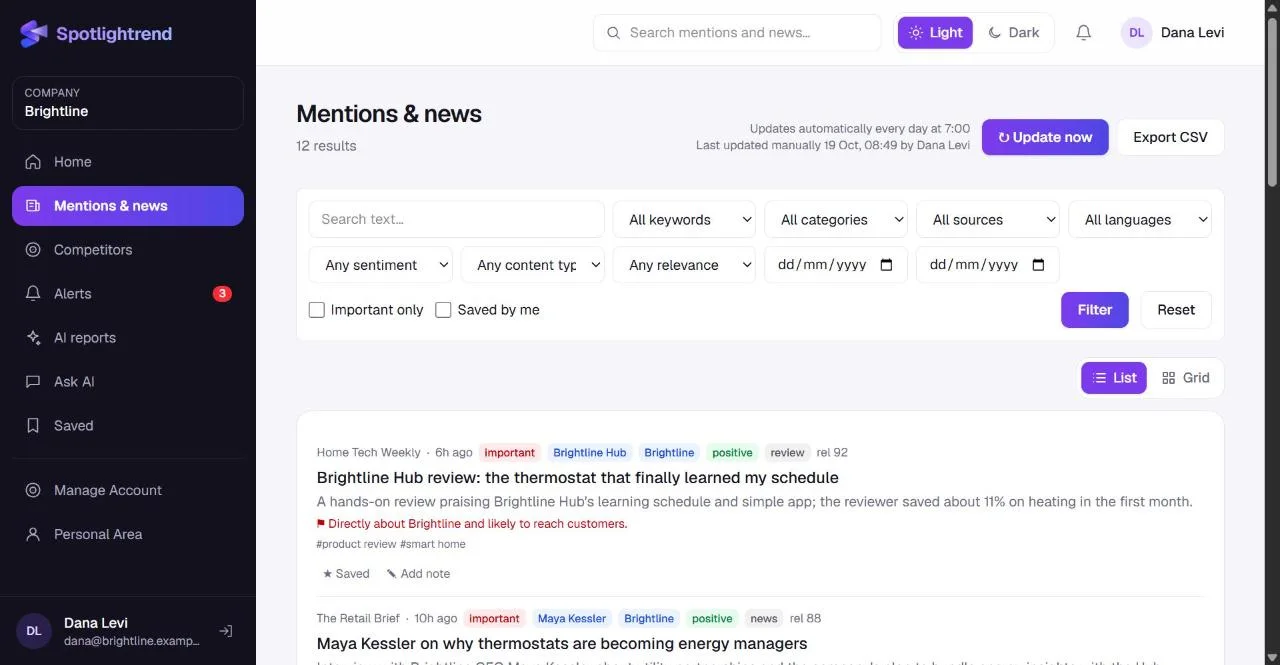
- Every morning, glance at new mentions and anything flagged as important. Bookmark what's worth discussing.
- When something negative appears, read it fully, then decide whether it needs a reply, a correction or nothing. Most of the time it needs nothing.
- Once a week, look at the bookmarks together and ask what they say about the market. Five minutes in a team meeting is enough.
Let the important things find you
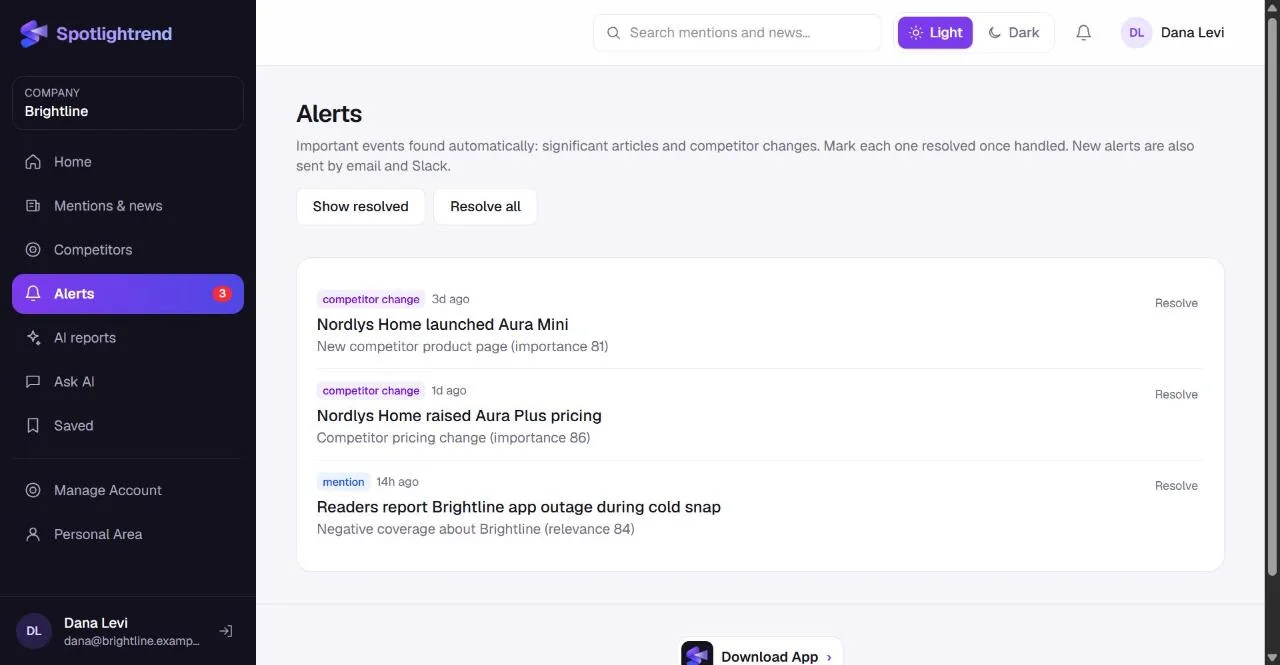
The routine above still depends on someone opening a dashboard. For the few things that can't wait, set up alerts. In Spotlightrend, important items reach the right people in the app, by email or in Slack, and each person can choose a daily or weekly digest instead of checking manually.
The goal isn't to know everything. It's to never be the last to know something that matters.
When a negative mention shows up
Sooner or later, monitoring will surface something unflattering: a critical review, a complaint quoted in an article, a comparison that doesn't go your way. Small teams tend to swing between two bad reactions, ignoring it completely or answering within the hour in a way they later regret. A calmer approach works better.
First, read the whole piece, not just the paragraph with your name. Context changes a lot; a "complaint" is sometimes a fair point buried in an otherwise positive article. Second, check the reach. A post on a site nobody reads doesn't need the same response as a story in your industry's biggest publication. Third, decide what kind of response, if any, fits:
- A factual error deserves a short, polite correction to the author, with the facts and a link.
- A real problem a customer had deserves a fix first, and a reply second.
- An opinion you disagree with usually deserves nothing at all.
Whatever you decide, write it down next to the mention, as a note the rest of the team can see. When the same topic comes up again in three months, you'll know what happened last time and why. That shared memory is one of the quiet advantages of keeping monitoring in one place instead of in personal inboxes, and it's worth more to a small team than any single alert.
The short version
Track five kinds of keywords, not fifty. Add the trade publications that your customers actually read. Skip duplicates, false matches and recycled news. Spend ten minutes a day and five minutes a week. Let alerts handle the urgent things. That's a brand monitoring setup a small team can keep running, which beats a perfect one that stops in March.
Try it on your own market
Set up your keywords in a few minutes; the first update runs right away.