How to monitor competitor pricing changes (without checking their sites every day)
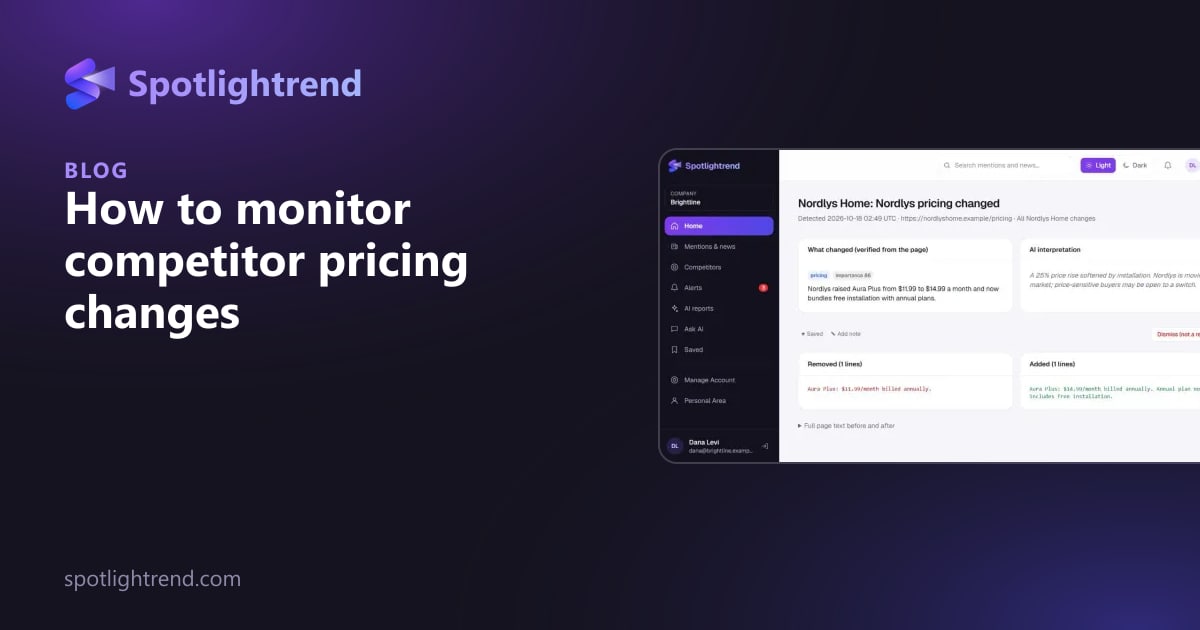
Every team that sells against competitors has had the same moment. A prospect says "but they're cheaper now," and nobody in the room knew. The price changed two weeks ago. It was on the competitor's website the whole time, in plain sight. Nobody was looking.
Watching competitor pricing isn't hard. Doing it consistently is. This article covers what to watch, how often, how to read a change once you find one, and how to stop doing it by hand.
Why pricing pages deserve special attention
A pricing page is one of the few places where a company states its strategy in public, in numbers. Product pages are full of adjectives. Blog posts are full of hopes. A pricing page has to commit: what's free, what costs extra, which plan the company wants you to buy, and how much it is willing to discount for a yearly commitment.
That makes it a surprisingly honest document. When a competitor moves a feature from its top plan into its middle one, it is telling you where it is losing deals. When it removes a free tier, it is telling you something about its costs or its investors. When the annual discount grows from 15% to 25%, someone there is worried about churn.
You don't need to guess at any of this. You need to notice it.
What exactly to watch
"The pricing page" is usually more than one page. For each competitor, make a short list:
- The main pricing page, including every plan, the prices for monthly and yearly billing, and the feature list under each plan.
- Plan comparison tables, which often live on a separate URL and change more often than the main page.
- Add-ons and usage limits: seats, projects, credits, API calls. A price can stay the same while the limit drops by half.
- Enterprise or "contact sales" wording. When a plan quietly moves from a listed price to "talk to us," that is a change too.
- The free trial and free plan terms: length, limits, whether a card is needed.
Most of the meaningful changes happen in the small print, not in the big number at the top.
How often to check
Daily is the right frequency for pricing. Weekly sounds reasonable until you realize that a promotion can start and end inside a week, and that your sales team will hear about a change from prospects long before a weekly check finds it.
Daily by hand, though, is where most teams give up. Opening ten pricing pages every morning and comparing them with what you remember from yesterday is tedious, error-prone work, and the first week someone is on holiday, it stops. That is the real reason most companies only notice competitor price changes by accident.
Reading a change: four questions
When you do spot a change, the temptation is to forward a screenshot to the team with "FYI." That rarely leads anywhere. Before you share it, answer four quick questions:
What exactly changed?
Be precise. "The Pro plan went from $49 to $59 a month, and the yearly discount is gone" is useful. "They changed their pricing" is not.
Who does it affect?
A change to the entry plan matters to your self-serve funnel. A change to the enterprise tier matters to your sales team. Route it to the people it affects.
Is it a one-off or a pattern?
Look at the history. A competitor that raised prices twice this year is in a different situation from one that ran a single promotion.
Do we need to do anything?
Often the answer is no, and that's fine. Sometimes it's "update the comparison page" or "brief sales before Thursday's calls." Write the answer down either way.
Automating it
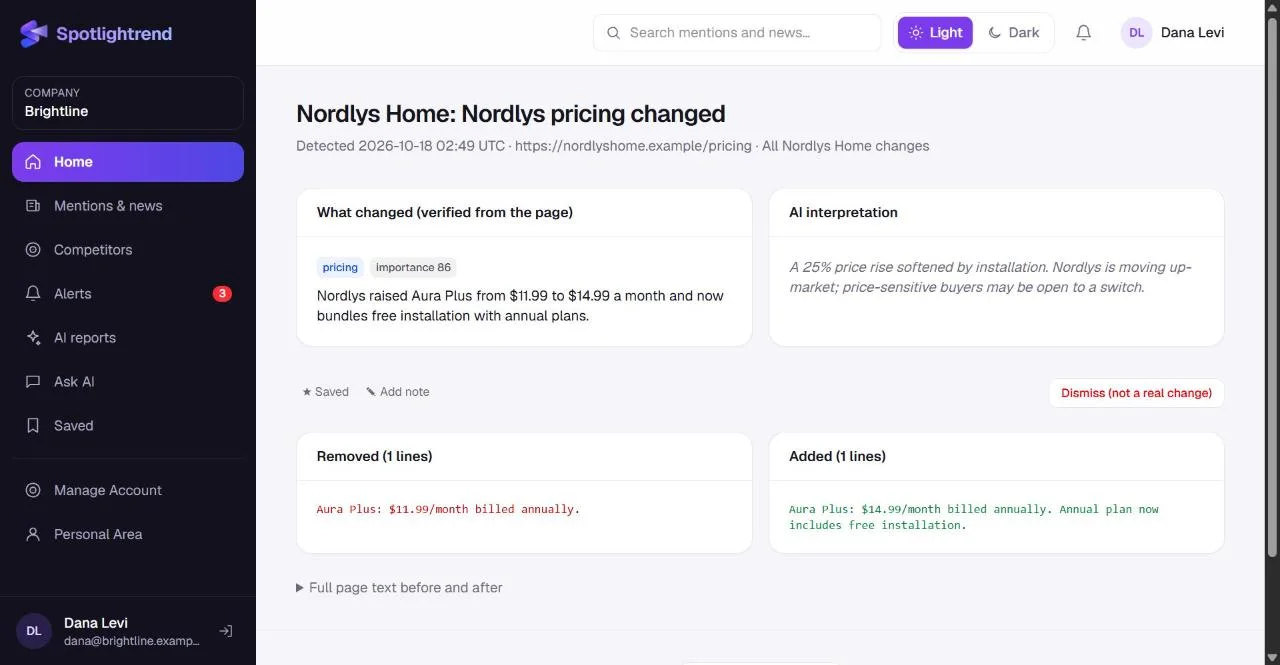
The manual part of this process, opening pages and comparing them, is exactly what software is good at. In Spotlightrend you add a competitor's domain once and choose which kinds of pages to watch: pricing, product, features, integrations and so on. From then on the pages are compared every day, and new or removed pages are picked up from the competitor's sitemap.
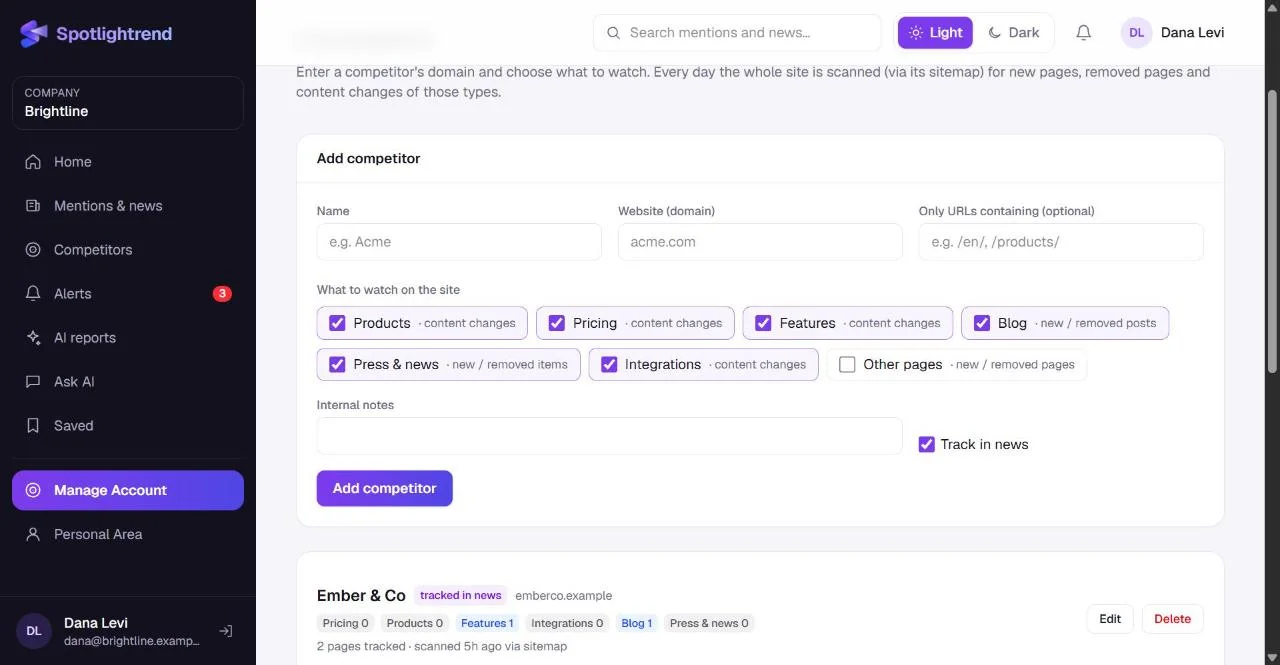
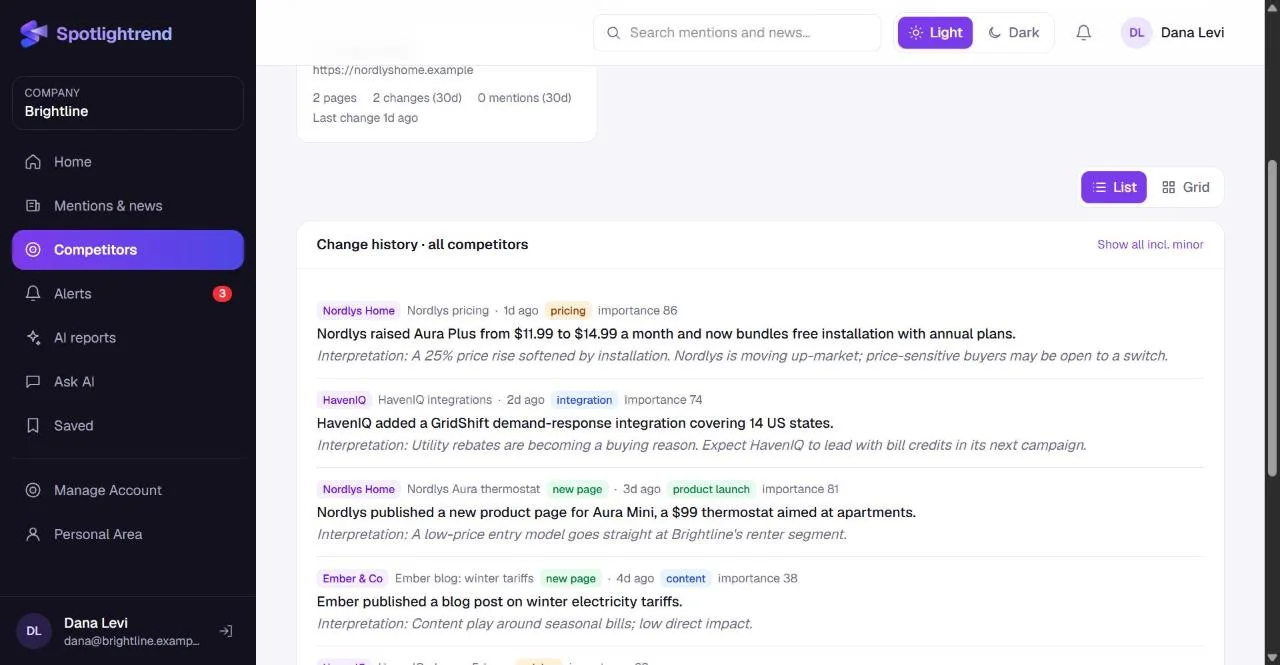
When something changes, you see what was removed and what was added, and the change shows up on the dashboard and in alerts. The four questions above still need a person, but the person now starts from the change itself instead of from a hunch.
Common mistakes
- Watching only the headline price. Limits, add-ons and plan names change far more often than the price itself.
- Keeping the history in someone's head. When that person leaves, so does your record of how the market moved. Keep changes somewhere the team can search.
- Reacting to every change. Matching a competitor's discount the day it appears teaches the market that your prices follow theirs. Notice quickly, decide slowly.
- Ignoring small competitors. The company that is half your size today is often the one experimenting most with pricing. Their tests are a free preview of where the market is going.
The short version
Pick your competitors and list the pricing-related pages for each. Check them every day, or better, let a tool do it. When something changes, describe it precisely, send it to the people it affects, look at the history, and decide whether to act. Done consistently, this turns "they're cheaper now?" from an awkward surprise into something your team already discussed last week.
Try it on your own market
Add your competitors and see their pricing changes the next morning.